
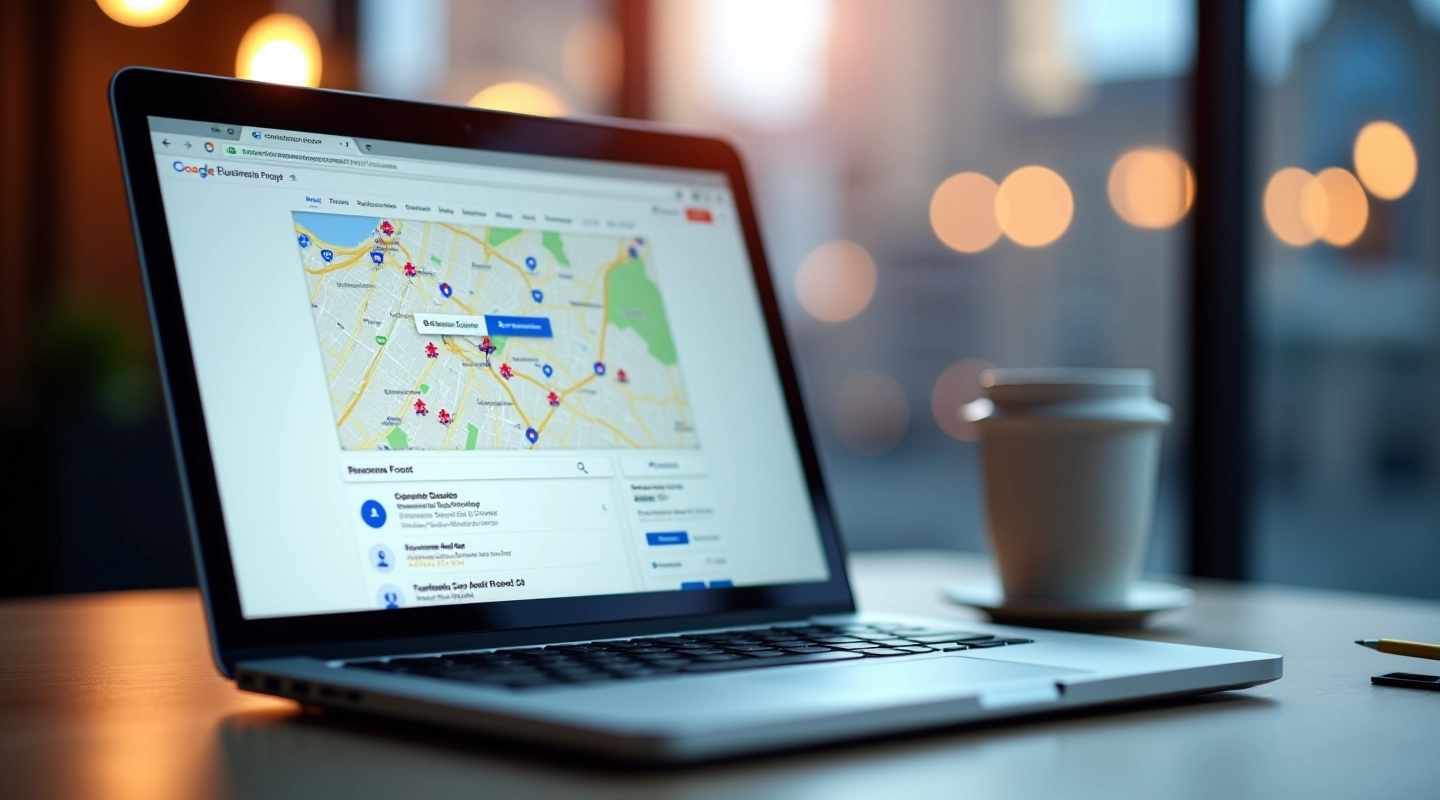
How to Set Up Your Google Business Profile Correctly
Complete walkthrough of setting up and optimizing your GBP. We cover the essentials that actually impact your local visibility.
Finding the keywords your neighbors actually search for. We'll show you how to discover what people want when they're looking for your services nearby.

Here's the thing: people searching for your service in Montreal aren't using the same keywords as someone in Toronto or Vancouver. They're looking for plumbers "near me," dentists "in Plateau Mont-Royal," or contractors "in the West Island." That specificity is what makes local keyword research different — and crucial for showing up when it matters most.
You're not competing against everyone on the internet. You're competing against the few businesses in your neighborhood. That's actually good news. It means you don't need massive SEO budgets to rank — you just need to understand what your local customers are actually searching for.

Start with Google Maps and Google Search. Type your service into Google and see what autocomplete suggests. If you're a plumber, search "plumber in" and watch the suggestions pop up. You'll see "plumber in Montreal," "plumber in NDG," "plumber in Griffintown." Those aren't random — they're actual searches people are typing.
Next, check what your competitors are ranking for. Visit their Google Business Profile, their website, and their local listings. You're not copying them — you're understanding the language your market uses. If three established contractors are all targeting "renovations NDG," that's a signal that people in that neighborhood are searching that way.
Don't forget seasonal patterns. A snow removal service needs different keywords in November than in June. A tax accountant's search volume spikes in March. Understanding when people search for what you do shapes your entire strategy.

Keyword research gives you the foundation, but results vary depending on how you implement it across your website, Google Business Profile, and local listings. No specific rankings or traffic volumes are guaranteed — SEO takes consistent effort and often several months to show real movement.
Free, built into Google Ads. You'll see search volume estimates for keywords in your area. Create a dummy campaign to access it — you don't have to spend money. Shows you monthly search volume for keywords you're considering.
Free goldmine. Read reviews of your competitors and yourself. People use natural language in reviews — they describe what they searched for or the problem they had. That's authentic keyword insight.
Shows you questions people ask about your service. Free version limited but useful. You'll see "what is," "where can I," "how to" questions that reveal what people actually want to know.
Free if you already own a website. Shows you what search terms bring people to your site, your current rankings, and click-through rates. Real data from your own business.

Don't try to rank for everything. Start with 5-10 primary keywords you want to own. These should be specific to your neighborhood and service. A cleaning company in Outremont isn't competing with a cleaning company in Laval — target that difference.
What's your main service? Write it down. Now add Montreal and your neighborhood. That's your starting point.
Use Google Keyword Planner or Semrush to see how many people search for each term monthly. Aim for keywords with real search volume — at least 50-100 searches per month in your area.
Search each keyword in Google. How many ads appear? How many local results? If there are 15 ads, that keyword is expensive. If there are 2-3 local businesses, that's opportunity.
Use your keywords naturally in your Google Business Profile description, your website, local directory listings, and content. Not forced — just where it makes sense.

Local keyword research doesn't require expensive tools or complex spreadsheets. It starts with listening — to Google's autocomplete, to your competitors, to your customers. Spend an afternoon typing into Google, reading reviews, and writing down the phrases you see repeated. That's your foundation.
Once you understand what your neighborhood is searching for, everything else gets easier. Your website content aligns with what people want. Your Google Business Profile uses the language they use. You're not guessing anymore — you're responding to actual demand.
Keyword research is just the first step. You'll want to make sure your Google Business Profile is set up properly and your local listings are consistent across the web.
Explore Our Complete GBP Setup Guide
Author
Editorial Team
Written by the LocalRank Montreal editorial team, focused on practical, transparent guidance for local SEO and Google Business Profile optimization.
Complete walkthrough of setting up and optimizing your GBP. We cover the essentials that actually impact your local visibility.
The three ranking factors that matter most for map pack placement. We'll show you what actually moves the needle.

How to encourage genuine customer reviews naturally. Includes templates and timing strategies that actually work.